Economy
UVM Surgeon Wins $38M ARPA-H Contract to Build AI Digital Twins for ICU Patients
By Bear Creek Staff, . Bear Creek Capital Network.
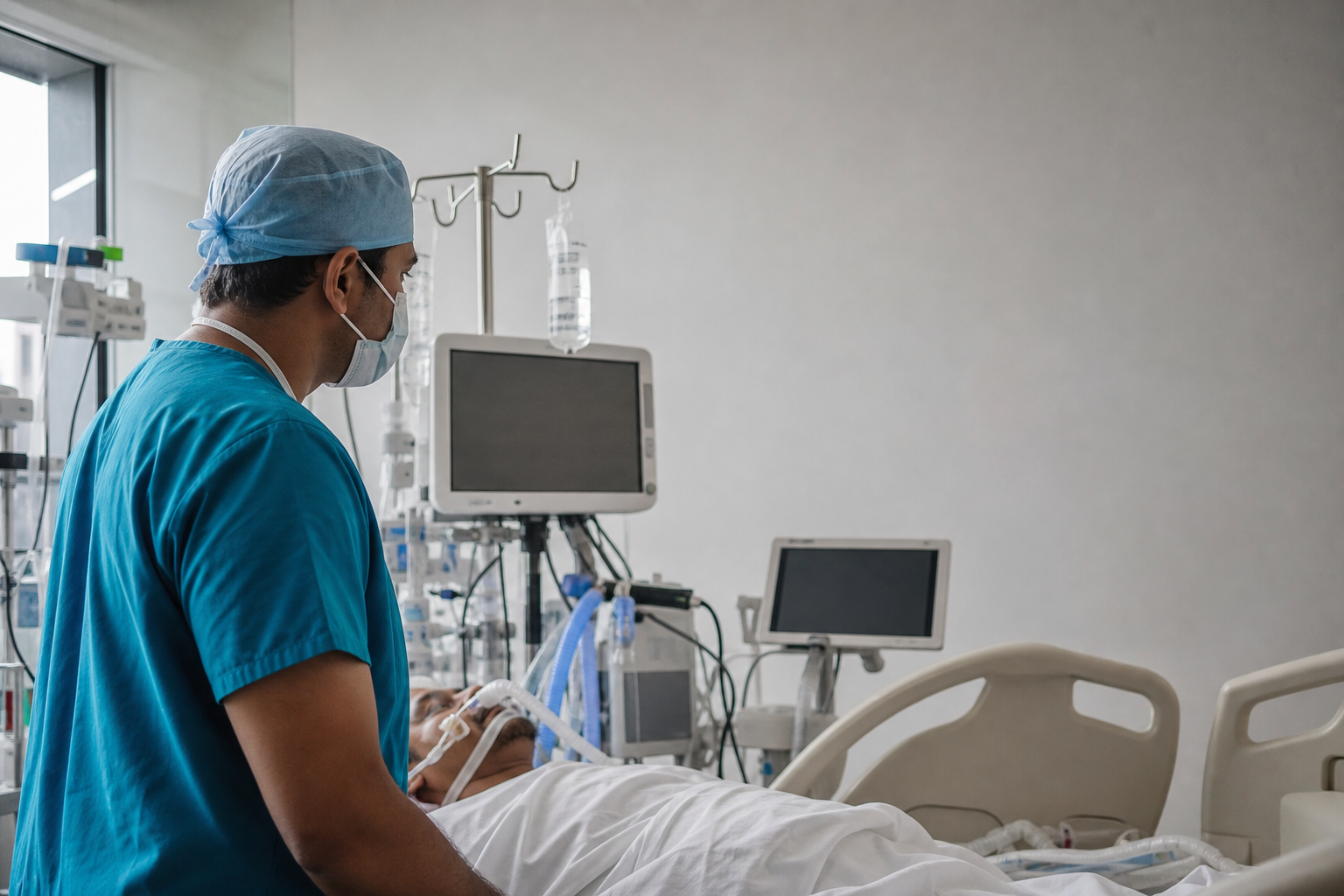
A University of Vermont trauma surgeon has landed what Business Insider Markets reports is the largest research award in the university's history: a contract worth up to $38 million from the Advanced Research Projects Agency for Health, a federal agency inside the U.S. Department of Health and Human Services, to build AI-powered digital twins for critically ill patients.
The researcher is Gary An, M.D., a surgeon and faculty member at UVM's Larner College of Medicine. His project, called ReSCUED, short for Reprogramming Severe Critical Illness Using Extensible Digital Twins, targets conditions such as sepsis, severe trauma and burns, where the patient's own immune system becomes the primary threat. The contract is structured as a milestone-based initiative running up to five years.
The core mechanism, as described by Business Insider Markets, works like this: blood is drawn from a critically ill patient every six hours, measuring immune cells, proteins and molecules. That data feeds a continuously updated mathematical model of the patient. Clinicians can then use the model to test FDA-approved treatment options virtually before applying them to the actual patient. An AI layer acts as what the project calls a "virtual consultant," analyzing biological interactions and suggesting intervention strategies tailored to that individual.
The project sits inside ARPA-H's Critical Illness Immunological Reprogramming and Control Point Learning Engine program, known as CIRCLE. If the technology performs as researchers hope, the project team believes it could cut ICU length of stay by at least 25 percent. Business Insider Markets puts the current scale of the problem at 4.6 million Americans treated in ICUs each year at a cost of up to $70 billion annually.
UVM's Larner College of Medicine leads the effort, but the project draws on institutions and companies across the country. Clinical data will be collected at Wake Forest University School of Medicine, the University of Alabama at Birmingham Heersking School of Medicine, and Washington University School of Medicine. Two private-sector partners supply specialized hardware: the DNA Medicine Institute of Cambridge, Massachusetts, contributes a bedside molecular testing platform originally built for the International Space Station, and InflammaSense, a California-based medical technology company, provides wearable sensors that measure activity in the vagus nerve, which regulates inflammation.
The project is structured in phases. The first three years focus on building and validating the digital twin computationally. Subsequent phases, contingent on hitting those milestones, move toward experimental settings and eventually clinical trials with critically ill patients.
The funding structure is worth noting for anyone tracking federal health research spending. ARPA-H operates on a model similar to DARPA, funding high-risk, high-reward projects with milestone gates rather than conventional grant cycles. The up-to figure on the contract means the full $38 million is not guaranteed; it depends on the research hitting defined targets at each stage. That structure limits downside for the funder but also means the project's full scope could be curtailed if early results disappoint.
What remains unknown at this stage is how the digital twin performs against standard ICU care in a controlled trial setting. The computational validation phase comes first, and no clinical trial data exists yet. The 25 percent reduction in ICU length of stay is a target the research team has set, not a result from a completed study. Whether the platform can be integrated into existing hospital workflows at scale, and what it would cost to deploy beyond the research sites, are questions the current contract does not answer.
Bear Creek Capital Network publishes content for informational and educational purposes only. Nothing in this article constitutes financial, investment, tax or legal advice, or a recommendation to buy or sell any security. Consider your own circumstances and consult a qualified professional before making financial decisions.